
Both materials can make a beautiful garden, but they behave differently. This comparison of concrete vs wooden outdoor furniture in Africa looks at appearance, weight, maintenance and design, so you can match the material to the space.
Appearance
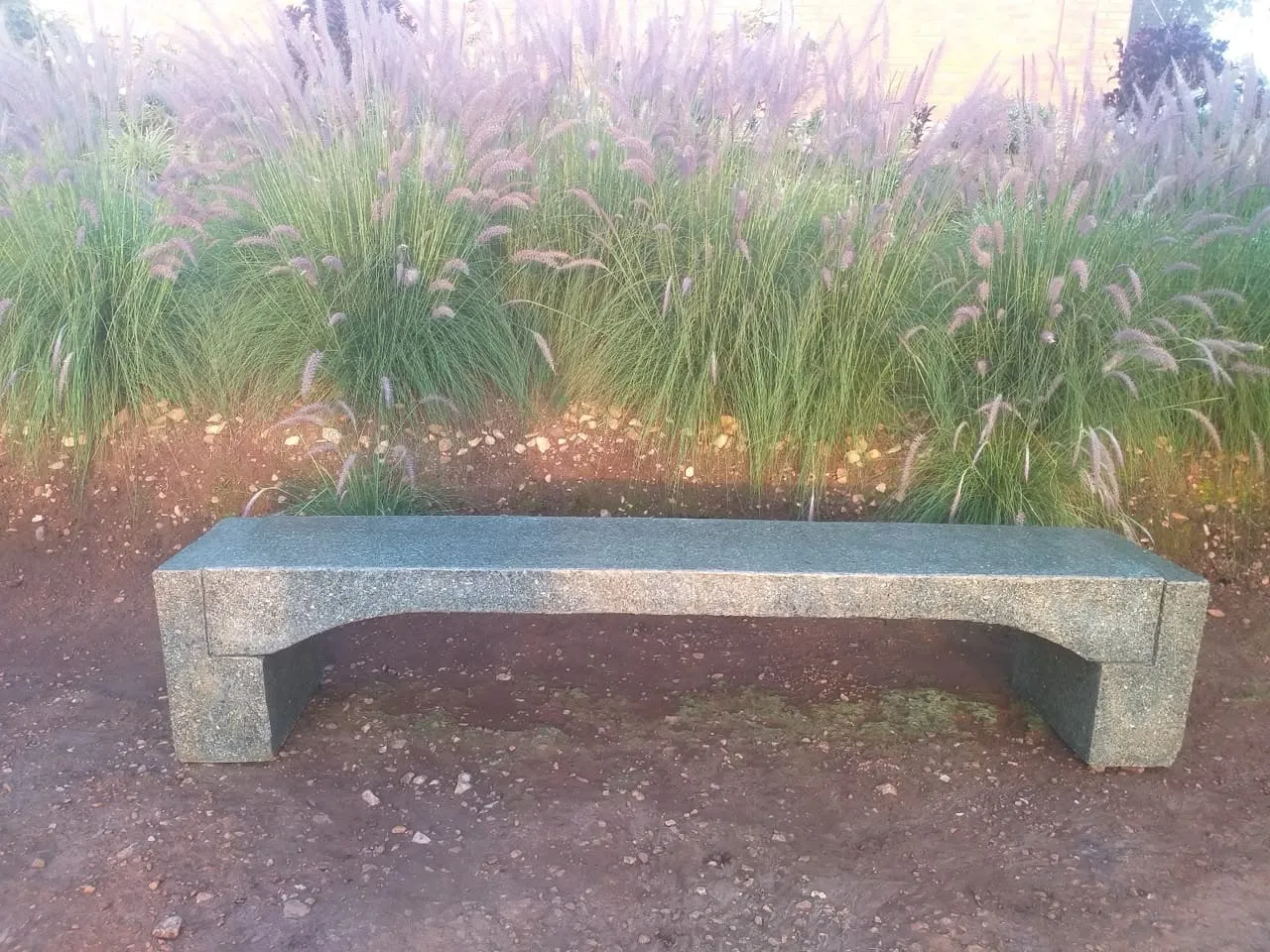
Wood is warm and familiar. Concrete is solid, architectural and fits modern gardens, terraces and hotel landscapes. Many of our designs combine both: a concrete frame with slatted timber details, like the bench designs in our range.
Weight and placement
Concrete is heavy, which keeps furniture stable in wind and makes it harder to move away. Wood is easier to relocate. If you want a fixed seating area, weight is an advantage. If you plan to rearrange often, think about this before you order, and read about lightweight concrete outdoor furniture.
Weather and maintenance
Rwanda has two main rainy seasons, as described by the Rwanda Meteorology Agency, so outdoor furniture spends part of the year wet. Untreated wood needs regular protection in these conditions, and timber from certified forests, such as that covered by the Forest Stewardship Council, helps you source responsibly. Concrete is made for outdoor use and needs less upkeep, mainly routine washing. See our guide on how to maintain concrete outdoor furniture.
Design flexibility
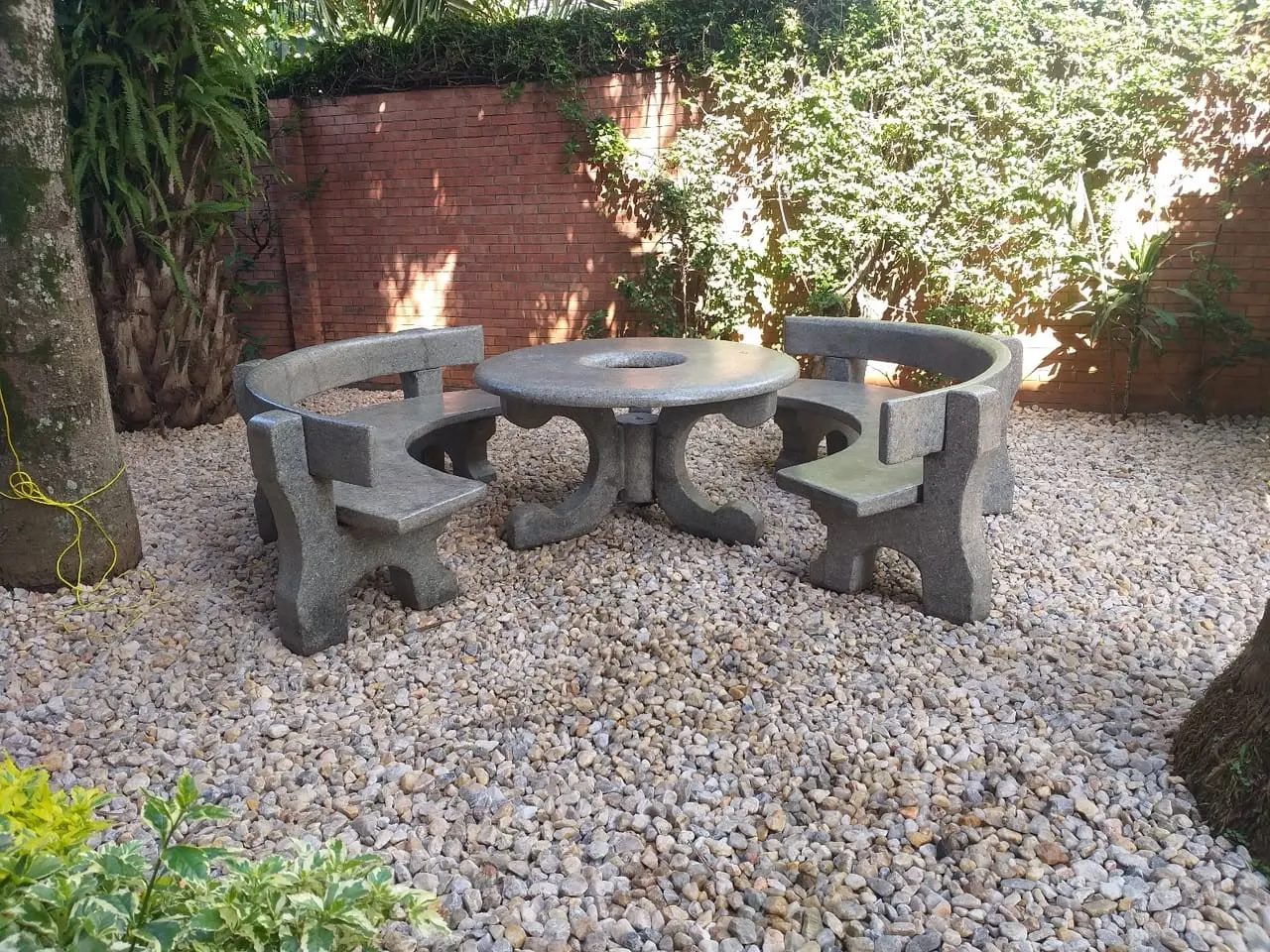
Concrete is cast in moulds, so curved benches, pedestal tables, planters and fountains are all possible, and custom sizes can be developed for a project. Wood is easy to cut, but complex curves and heavy pieces are harder to build.
Which should you choose?
- Choose concrete for permanent seating, hotel and restaurant terraces, schools, parks and areas that need stable furniture with little maintenance.
- Choose wood for lightweight, movable pieces or when you want a warmer, softer look and are ready to maintain it.
- Combine both with concrete frames and timber slats for balance.
Not sure? Tell us the space and how it will be used, and we will suggest options from our outdoor furniture range.