Choosing outdoor furniture for restaurants in Africa is a business decision as much as a design one. A terrace or garden brings in guests during good weather, but only if the seating is comfortable, tidy and able to take daily use. This guide explains how to plan capacity, spacing and materials so that your outdoor area works well from the first day.
Start with capacity and layout
Measure the space and decide how many guests you want to seat at your busiest time. Then work backwards to the number of tables. Leave clear walkways for staff carrying trays and for guests who need easy access. A layout that looks full on paper may be difficult to serve in practice, so mark the positions on the ground with tape before you order. If you are unsure, send us your plan or photographs and we can discuss it.
Outdoor furniture for restaurants in Africa: why durability matters
Restaurant furniture is used for long hours, cleaned often and exposed to sun, rain and spills. Precast concrete is a heavy, stable material that stays in place, which many venues value on a busy terrace. It is not easily blown over by the wind and does not need to be stored every night. For a comparison with other materials, read concrete versus wooden outdoor furniture.
Mix tables, benches and sets
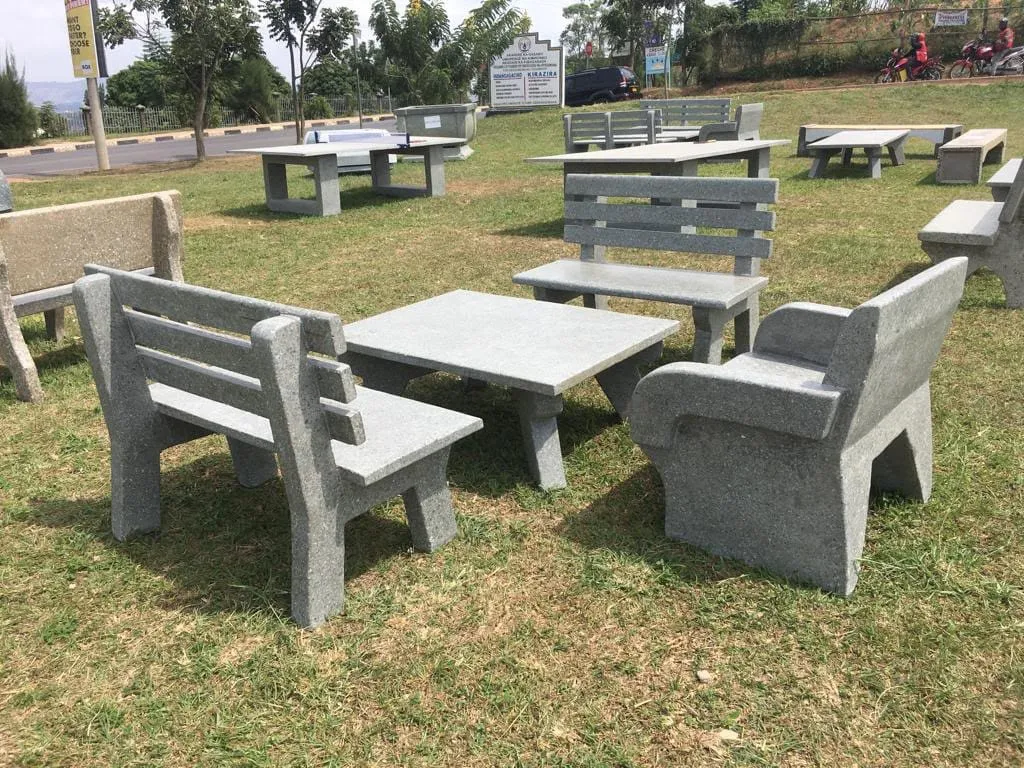
- Table-and-bench sets: efficient for families and groups, and simple to place in rows. See our table-and-bench sets.
- Separate garden tables: useful when you want to combine them with other seating or arrange them flexibly.
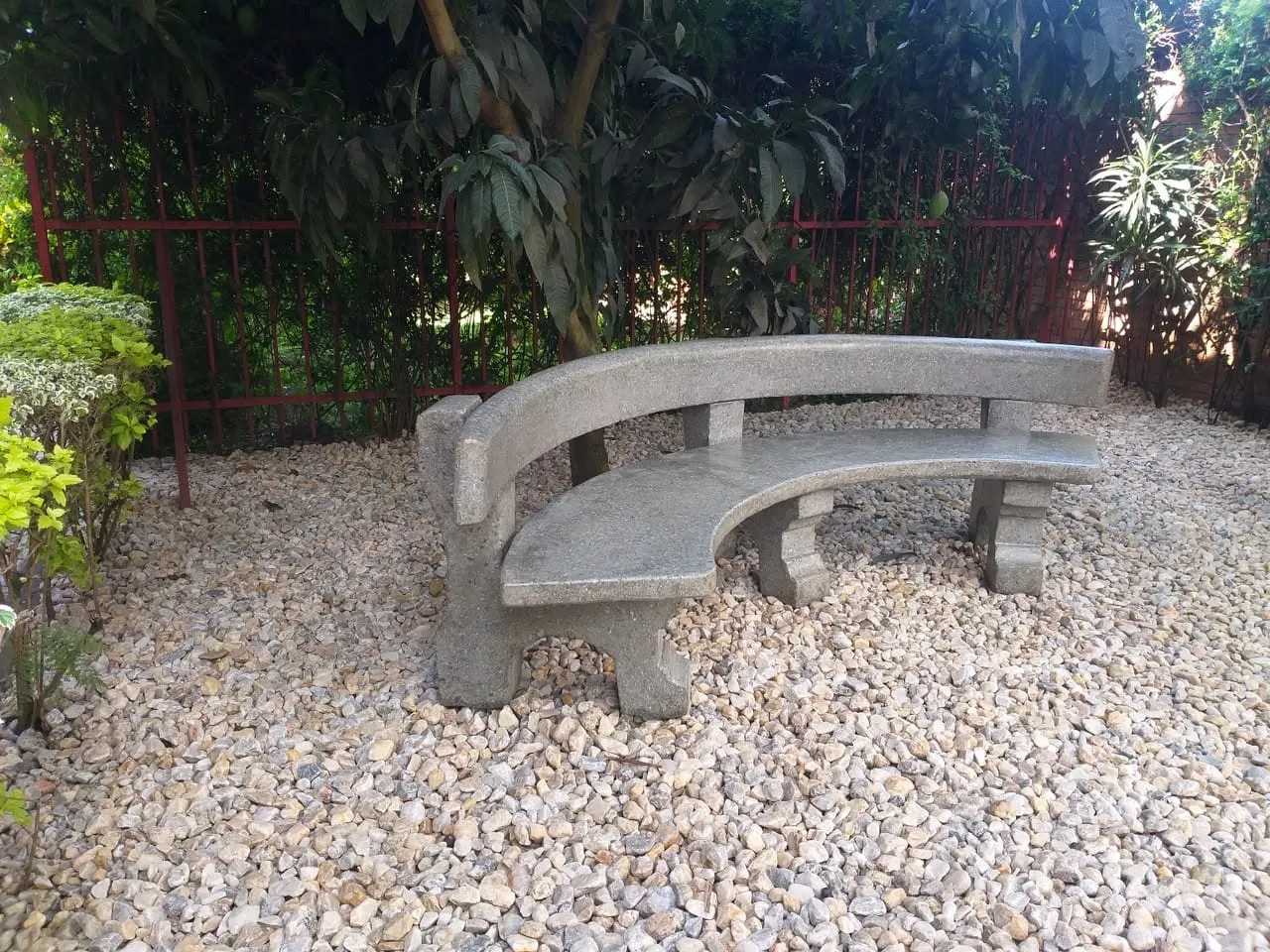
- Benches along walls or borders: concrete benches can create extra seating for waiting guests or for drinks and coffee.
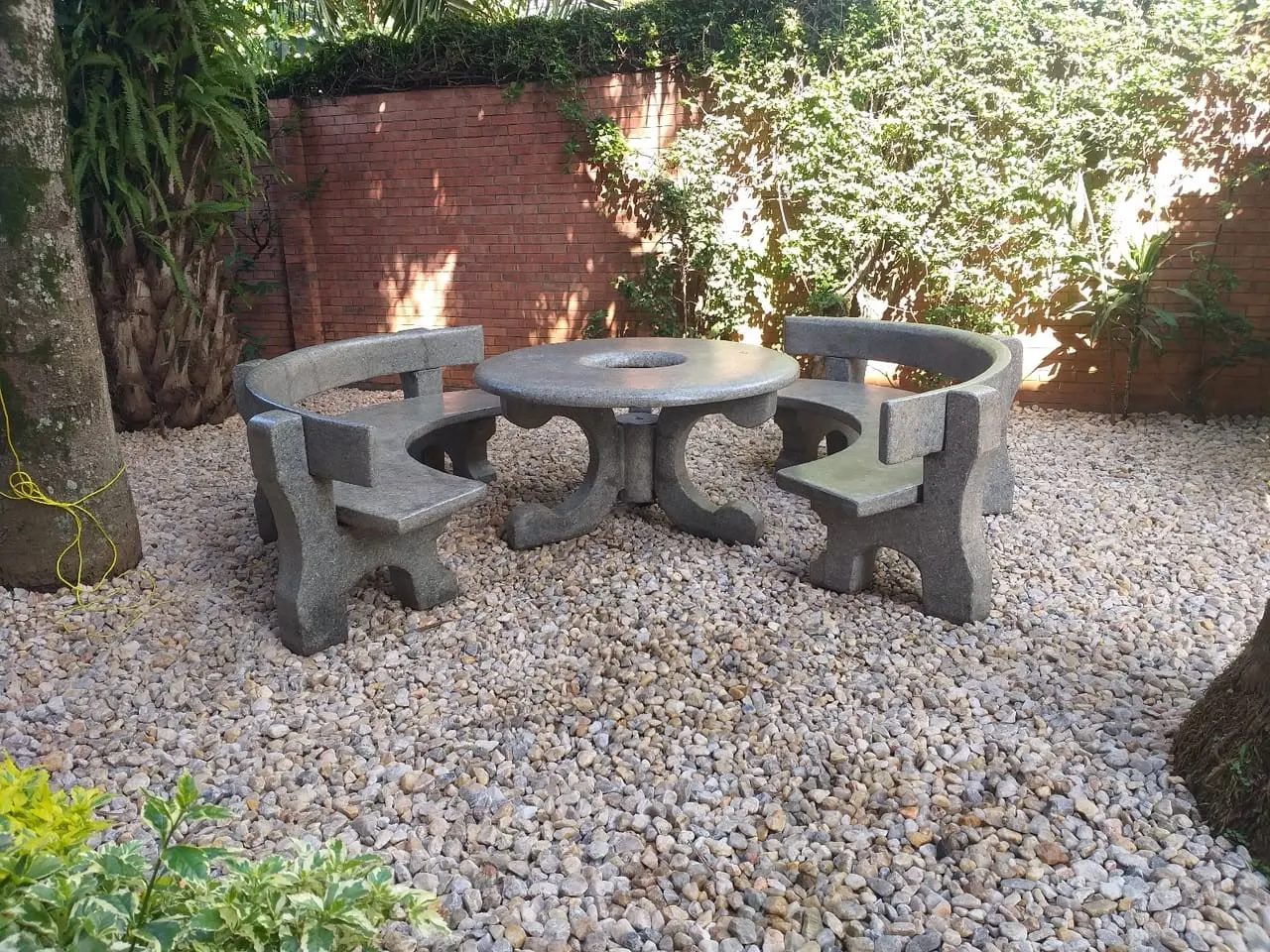
- Round tables with curved seats: a good choice for a garden corner where you want a more social setting.
Mixing formats gives guests a choice between a quick coffee and a longer meal. For hotels that also run a restaurant, our page on hotels and restaurants explains how we plan larger projects.
Concrete benches for hotels and restaurants in Africa: practical points
Concrete furniture is heavy, so decide on the final position before delivery. Check that the ground is firm and level, that the route from the gate to the terrace is clear and that the area drains well after rain. Installation and delivery terms are confirmed per project, and RCGF delivers across Africa from its base in Kigali. Our delivery and installation page lists what to confirm before ordering.
Think about the guest experience as well. Shade matters in hot weather, so consider placing tables under trees, awnings or a pergola. Lighting matters in the evening, and a clean, even surface helps guests feel that the venue is cared for. Greenery in planters can define zones, soften walls and separate tables without blocking the view.
Cleaning and daily care
A restaurant needs surfaces that can be wiped quickly. Plan a simple routine: remove food and drink residue after each service, rinse down surfaces when needed and sweep around the legs. Avoid dragging furniture across paving. For a more detailed routine, see how to maintain concrete outdoor furniture.
Custom sizes and outdoor furniture for cafes in Africa
Cafes often work with narrow pavements, small courtyards or irregular corners. A standard product may not fit, which is where custom concrete work helps. We can discuss a bench cut to a wall length, a smaller table for a tight corner or a repeated design that matches your brand. Aged or weathered finishes are available on request, and planters can add greenery and soften the edges of the terrace. Our planters and flower pots pair well with seating.
Plan for growth too. If you expect to add seating next season, tell us now so that new pieces can match the first batch in design and finish. A consistent look across the terrace is easier to achieve when the whole plan is shared from the start.
Request a quote for your restaurant or cafe
To prepare an accurate quotation, send the number of seats you need, the products you are considering, photographs of the area and your location. Add any special sizes. When you are ready, request a quote by form, phone or WhatsApp.